
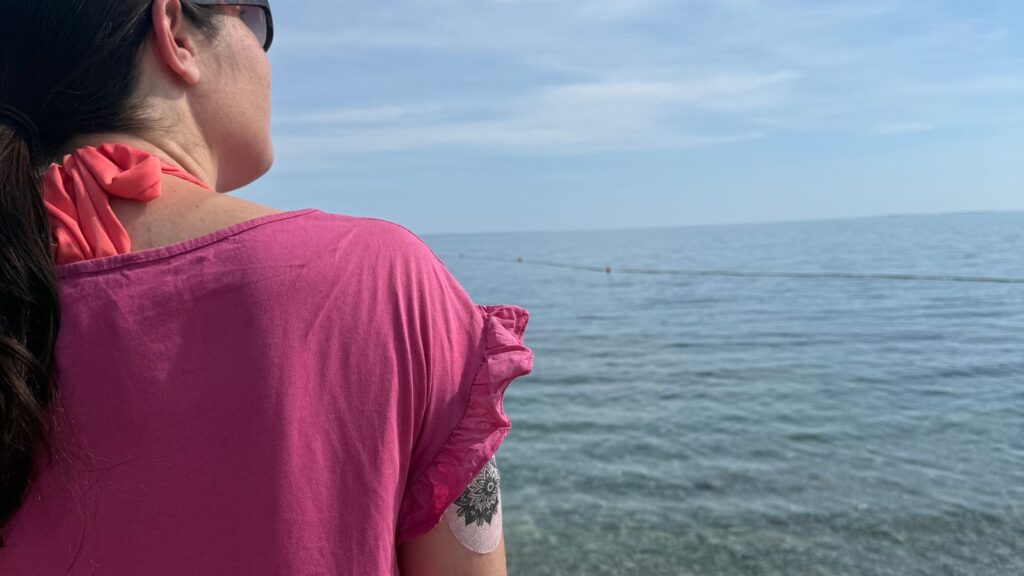
Diabetes and Summer: When Your Routine Changes, It Helps to Have a Plan
In summer, when living with diabetes, it is important to stay well hydrated, store insulin properly, have enough diabetes supplies, protect your sensor, keep fast-acting sugar nearby and check glucose levels a little more often.
Diabetes and summer can go well together if we prepare a little for the change in routine. Summer has its own rhythm. The days are longer, we spend more time outside, travel more, eat at different times, children have summer holidays, and there is more swimming, day trips, ice cream, picnics and spontaneous plans.
And although this is exactly what makes summer so lovely, a change in routine can bring a few extra challenges when living with diabetes. I know this from personal experience, as I have been living with type 1 diabetes for 30 years, and I am also the mum of a daughter with diabetes. We have learned to enjoy summer, but with a little extra planning.
It is not only about the heat. In summer, almost everything changes: our daily schedule, food, physical activity, sleep, travel, access to diabetes supplies and even how well a sensor or infusion set stays attached to the skin.
This does not mean that summer has to be stressful. It only means that it helps to have a little more of a plan, a little more backup supplies and a few extra solutions in your bag.
1. Summer Changes Your Routine
During the school year, work weeks or regular everyday life, we often have at least some kind of routine. We know when we get up, when we eat, when we are more active and when it is time to rest. In summer, this rhythm can change quickly: meals may be later, evenings longer, sleep different, and there may be more day trips, visits, social gatherings and unexpected situations.
With diabetes, routine often helps with predictability. When the rhythm of the day changes, blood glucose patterns can change too. That is why it can be helpful in summer to check glucose levels a little more often and be ready to make adjustments.
2. We Often Eat Differently in Summer
Food is often different in summer too. There is more fruit, ice cream, food on the go, restaurant meals, picnics, hotel breakfasts, all-inclusive options and meals at unusual times. When we travel, we do not always know the food in advance. Portions can be different, and carbohydrates can sometimes be harder to estimate.
This does not mean we have to avoid summer food. It only means it helps to pay a little more attention: check glucose levels, observe how the body responds, keep a few familiar snacks with you and take time to estimate the meal when needed.
3. Heat and Diabetes
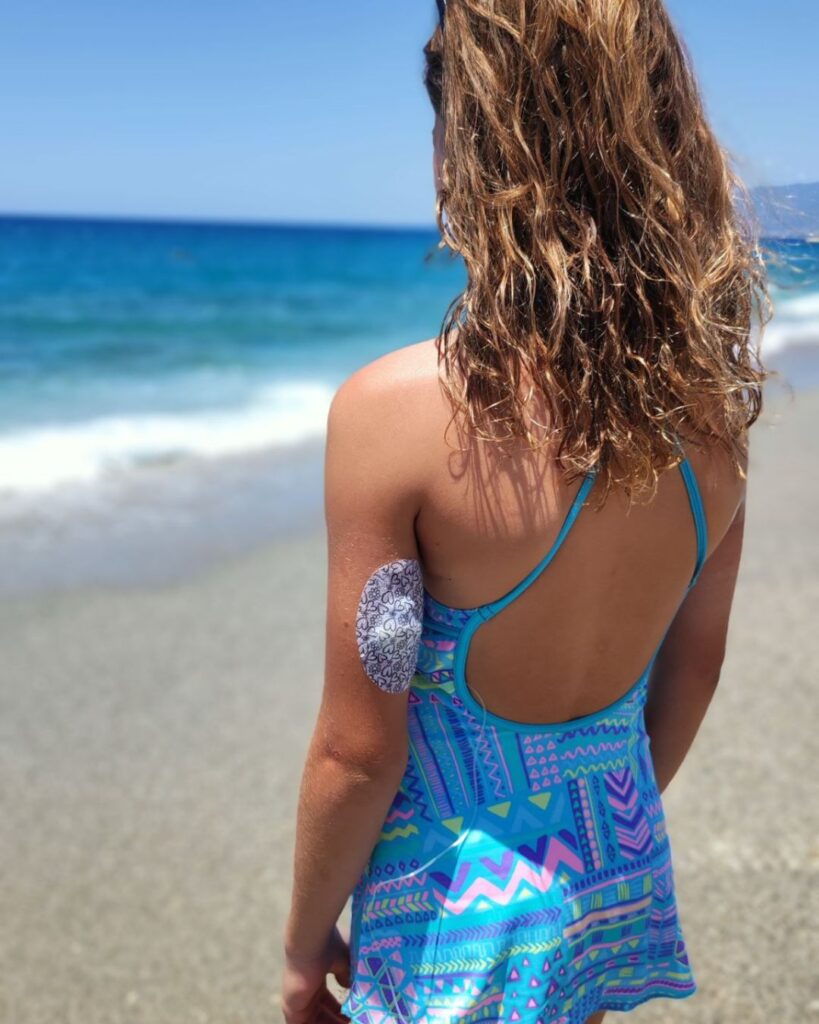
Although heat is not the only summer challenge, it still plays an important role in diabetes management. On hot days, blood glucose can behave more unpredictably. Some people may experience low blood glucose more often because of the heat, sweating, increased activity or faster insulin absorption. For others, not drinking enough fluids can contribute to higher glucose levels.
That is why it is especially important in summer to drink enough water, avoid the strongest heat when possible and always have something with you in case of hypoglycaemia: glucose tablets, juice or another fast-acting source of sugar.
4. Insulin and Diabetes Supplies Need Protection in Summer
Before going on holiday, it is a good idea to check in advance how much insulin and diabetes supplies you have at home. In summer, it can easily happen that just before leaving, you realise you are missing a sensor, infusion set, reservoir, insulin or something else you really need. That is why it is best to organise your supplies a few days earlier, not the evening before you leave.
It is also wise to take more supplies on holiday than you would usually need. A sensor can come loose, an infusion set can get blocked, insulin can overheat, or you may need your glucose meter more often than expected. If you are travelling by plane, it is recommended to keep insulin and essential diabetes supplies in your hand luggage.
Insulin does not like heat. Do not leave it in a hot car, in direct sunlight or in a beach bag. When travelling, it is best to store it in a cooling case or pouch, while making sure it does not come into direct contact with ice and does not freeze.
5. Glucose Sensors Need Extra Protection in Summer
Glucose sensors have become an essential tool for good diabetes management in recent years.
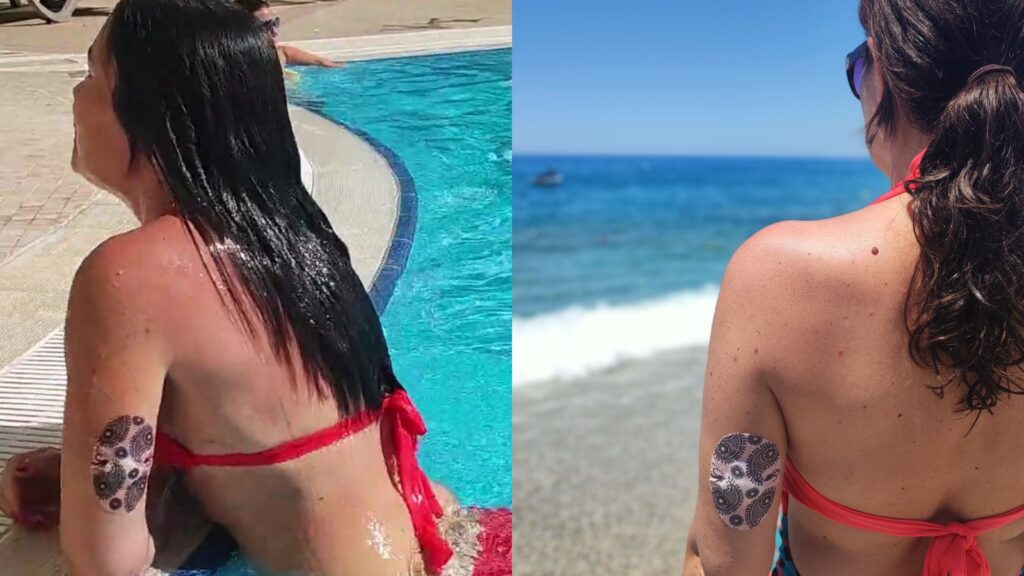
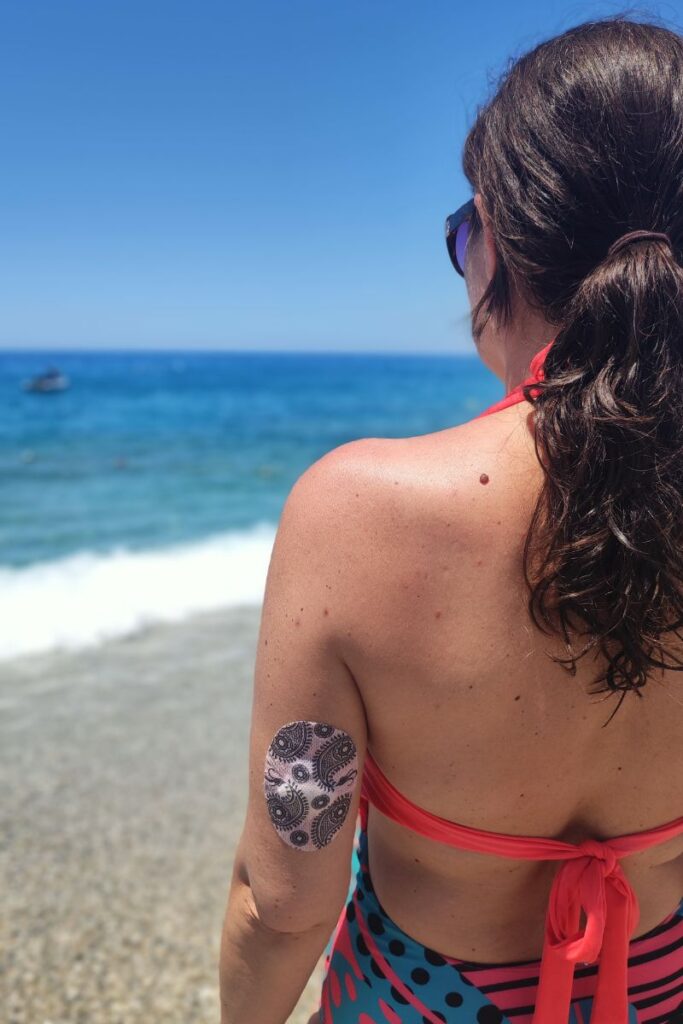
The sea, pool, sweating, sunscreen and heat can all affect how well a sensor stays attached to the skin. A sensor is part of your summer essentials, so let’s make sure it stays securely in place and looks beautiful too. That is exactly why 2sweet4me sensor patches are here.
Before applying the patch, make sure the skin is clean and completely dry, and apply the patch with clean hands. We recommend applying the patch in the evening, as it should not get wet for at least one hour after application. This gives the adhesive enough time to bond well to the skin. After swimming or bathing, gently pat the patch dry with a towel.
2sweet4me patches are durable, breathable and gentle on the skin, which is especially useful during the summer months.
You can find more tips on how to apply the patches correctly here: LINK TO INSTRUCTIONS.
6. Keep a “Mini Diabetes Kit” with You at the Beach or on a Day Trip
In summer, it is helpful to have a small “mini kit” ready to take with you to the beach, pool, on a day trip, picnic, walk, longer drive or holiday outing. It does not need to be big. What matters is that it contains the things you may need quickly.
What to pack in your mini kit:
- fast-acting sugar for hypoglycaemia, such as glucose tablets, juice or gel
- water and a small snack
- glucose meter
- spare infusion set or insulin pen
- spare sensor patch
- spare pump battery
7. Plan Physical Activity Wisely
Summer often means more movement: swimming, cycling, walks, beach games, walking around towns, day trips, sports camps or simply spending more time outside. Physical activity can affect blood glucose for several hours after the activity.
That is why it is good to observe how your body responds and to keep fast-acting sugar with you. For longer activities, it is also helpful to plan a snack, water and a break.
On an insulin pump, the “temporary target” feature can be very useful during physical activity. Use it according to the guidance of your healthcare team.
If it is very hot, it is better to plan bigger activities in the morning or later in the evening, when temperatures are not at their highest. This helps reduce the risk of overheating, dehydration and unpleasant blood glucose fluctuations.
Summer Can Feel Relaxed When We Are Prepared
Diabetes comes with us to the seaside, to the mountains, on day trips, on planes, to campsites, to the pool and for ice cream. Sometimes it requires a little more organisation, but that does not mean it has to ruin summer. I am living proof of that.
When we have enough diabetes supplies with us, properly stored insulin, fast-acting sugar, water, a backup plan and a well-secured sensor, everything becomes much easier.
May summer be as relaxed, safe and full of beautiful moments as possible. Diabetes is part of the journey, but it is not a reason to stay at home.
If you are looking for a solution to help your sensor stay in place, take a look at our 2sweet4me sensor patches. I developed them from my own need, for myself and my daughter, and they are made with a real understanding of what we truly need.

DISCLAIMER: This is a personal blog. Any views or opinions represented in this blog are personal and belong solely to the blog owner and do not represent those of people, institutions or organizations that the owner may or may not be associated with in professional or personal capacity, unless explicitly stated. This blog content expresses only the views or opinions of the author(s), and should not be taken as professional medical advice. Consult your healthcare professional prior to making any decisions regarding your medication, diet and physical activity.